In late July, fighting erupted along Cambodia’s northern border with Thailand, forcing tens of thousands of people to flee their homes. Strikes occurred across multiple provinces, including Preah Vihear, Oddar Meanchey, and Battambang, with reports of cluster munitions used in civilian areas.
By the time a ceasefire came into effect on July 29, over 80,000 Cambodians had been displaced to at least 59 temporary camps. Three weeks on, the Thailand-Cambodia ceasefire is holding, although tensions remain high in many border communities, and local authorities remain on alert.
The HALO Trust employs over 1,200 staff across Cambodia, many of whom live in the communities most affected by the recent escalation. Staff based in field offices near the border were safely evacuated to Siem Reap, and others relocated with their families to IDP camps. HALO maintained contact with all affected team members and they remain safe and accounted for.
HALO Cambodia teams are now responding directly to needs on the ground.
Delivering urgent risk education
In the wake of fighting, new explosive contamination is suspected in several areas near the border, including around homes, temples, and farmland. As families return to their communities, the risk of encountering landmines, cluster munitions, or other unexploded ordnance is extremely high.
To help prevent accidents, HALO is delivering emergency Explosive Ordnance Risk Education (EORE) classes in displacement camps and conflict-affected villages. These classes help people recognize explosive hazards and understand how to stay safe.
In the first two weeks of August alone, four HALO teams delivered 539 risk education classes, reaching nearly 6,000 people—including 2,690 children


Surveying for new explosive threats
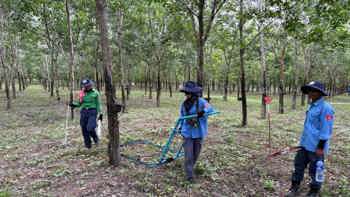
In parallel with the risk education response, HALO has deployed seven survey teams to assess potential new contamination. These teams are working in communities close to known strike locations, where deadly explosives may remain hidden. Where hazardous areas are identified, teams mark items for safe removal at a later stage and report dangerous zones to national authorities.
Survey teams are also providing emergency Risk Education in areas where civilians are at immediate risk, expanding the reach of HALO’s life-saving education efforts.

(Above) HALO’s response: Yellow dots show where HALO has delivered risk education. Pink dots show where HALO is inspecting for explosive hazards.
Supporting local humanitarian efforts
In addition to survey and risk education work, HALO Cambodia staff have also launched a blood drive in response to immediate humanitarian needs to support local health services during this crisis.


The situation remains fluid, but HALO’s commitment to protecting lives in Cambodia has not changed. HALO is continuing to work with local authorities and will continue to do our part to address the new contamination while supporting IDPs in safely returning home.