Zimbabwe
Zimbabwe sits on the Indian Ocean coast of southern Africa. It is one of the most heavily-mined countries in the world.
We’ve been clearing landmines and teaching people how to stay safe in Zimbabwe since 2013, but we still have a long way to go.


Situation in Zimbabwe
Dense belts of landmines were laid by the Rhodesian army during the Liberation War in the 1970s. These were mainly along the borders with Mozambique and Zambia. In some of the densest sections of minefield, there are 5,500 mines per linear kilometre. Learn more about Zimbabwe's minefields
There are several different types of mine here, including a particularly sensitive South African mine called an R2M2. These mines are hard to detect and are still very dangerous, almost 50 years after they were laid.
These minefields have killed or injured more than 1,500 people and 120,000 cattle since Zimbabwe gained its independence in 1980. The loss of cattle also threatens livelihoods.

Children collect water at the Maphioss pump

HALO's work and impact in Zimbabwe
HALO’s work in Zimbabwe is focused on clearing landmines in the north east of the country. We employ several hundred local men and women in demining here. Since 2013, we’ve destroyed over 220,000 landmines. That’s nearly four landmines for every person living in the area.
In November 2021, HALO became the first operator to hand over an entire district, Mount Darwin, as landmine-free.
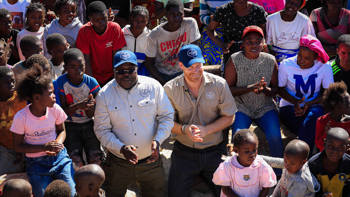
We've trained 17,692 adults and 73,057 children in staying safe from explosives since 2015. We work with Happy Readers, a local charity that provides children with educational books on the risks of mines.
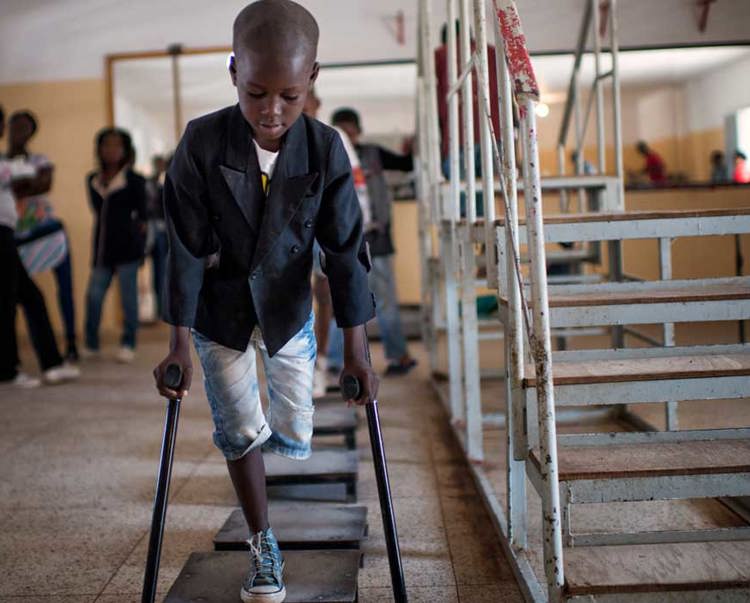
We also work with Cassim’s Prosthetics to support amputees. Prosthetics are in short supply and many in use are very old.

Zimbabwean children walking to school through a minefield

"I'm so happy now. We were always worried about the children and livestock. Now the landmines have been cleared, we're no longer afraid, and our farming land has grown."
Other HALO programmes in Africa




HALO's work in Zimbabwe is funded by: